翡翠入門
翡翠同軟玉有咩分別?唔好再搞混!
Jadeite vs. Nephrite: What's the Difference?
「玉」係一個廣義嘅概念,包括翡翠(硬玉)同軟玉兩大類。好多人唔知自己買嘅係邊種,呢篇文幫你一次搞清楚。
喺珠寶市場上,「玉」係一個廣義嘅概念,實際上包括兩種完全唔同嘅礦物:翡翠(Jadeite,硬玉)同軟玉(Nephrite)。兩者外觀相似,但礦物成分、硬度、產地同價值都大不相同。
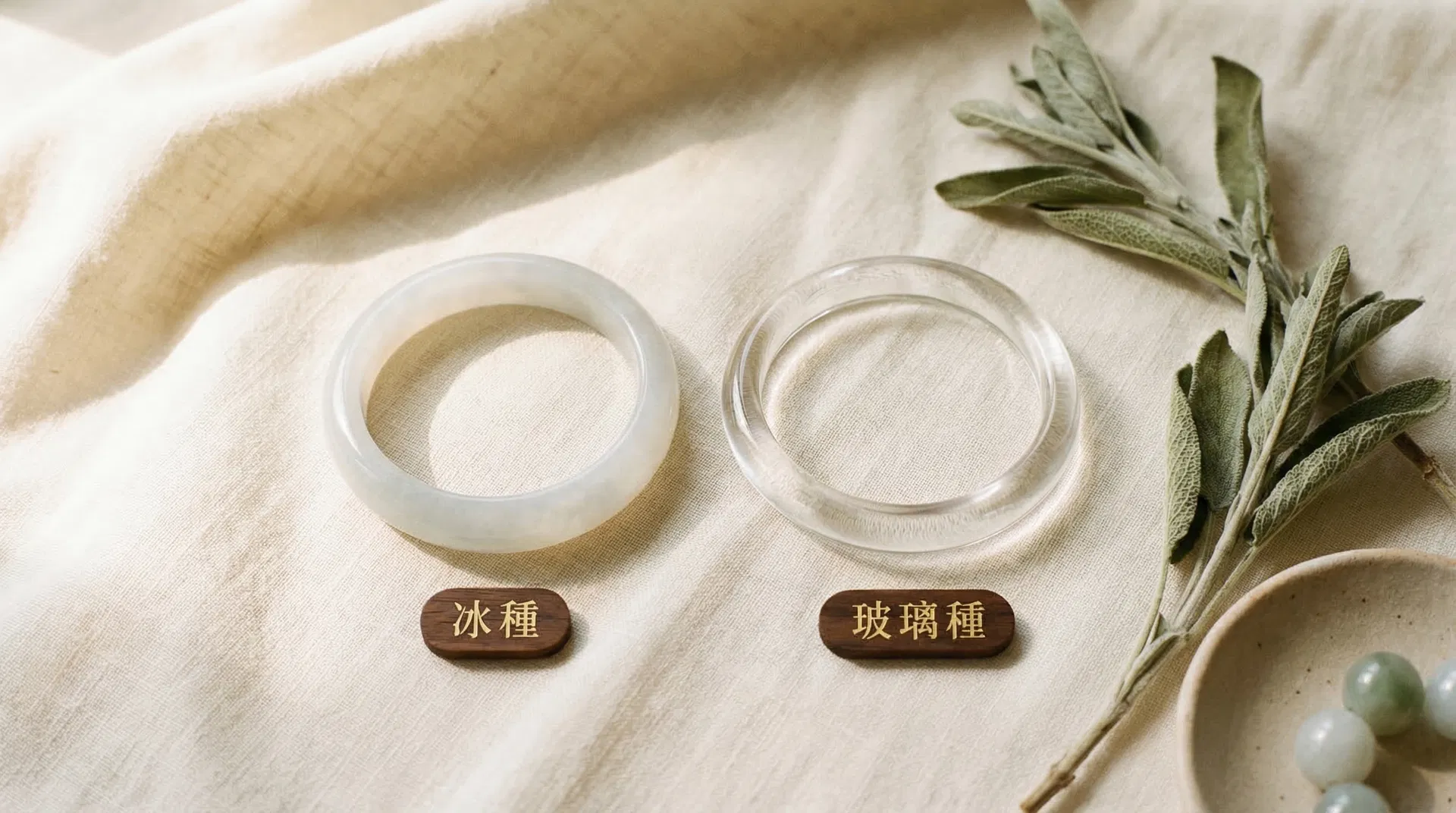
翡翠(硬玉 Jadeite)
翡翠係輝石族礦物,主要成分係鈉鋁矽酸鹽(NaAlSi₂O₆)。翡翠嘅硬度係 6.5-7(莫氏硬度),比軟玉硬。翡翠主要產自緬甸,係世界上最重要嘅翡翠產地,其他產地包括危地馬拉、日本等。
- 礦物成分:鈉鋁矽酸鹽(輝石族)
- 硬度:6.5-7(莫氏硬度)
- 主要產地:緬甸(最重要)、危地馬拉
- 顏色:綠、紫、白、黃、黑等多種顏色
- 光澤:玻璃光澤,通透度高
- 密度:3.2-3.4 g/cm³
軟玉(Nephrite)
軟玉係角閃石族礦物,主要成分係鈣鎂矽酸鹽。軟玉嘅硬度係 6-6.5(莫氏硬度),比翡翠略軟,但韌性更高,唔容易碎裂。軟玉主要產自中國(新疆和田玉係最著名嘅軟玉)、加拿大、新西蘭等地。
- 礦物成分:鈣鎂矽酸鹽(角閃石族)
- 硬度:6-6.5(莫氏硬度)
- 主要產地:中國(和田玉)、加拿大、新西蘭
- 顏色:白色(羊脂白)、青色、黃色為主
- 光澤:蠟狀光澤,通透度較低
- 密度:2.9-3.1 g/cm³
點樣分辨?
- 光澤:翡翠係玻璃光澤,通透度高;軟玉係蠟狀光澤,較為溫潤
- 顏色:翡翠顏色更鮮豔,尤其係綠色;軟玉顏色較為柔和
- 重量:翡翠密度較高,同樣大小嘅翡翠比軟玉重
- 產地:緬甸玉(翡翠)vs 和田玉(軟玉)
💡 Missing Faye Co. 專門出售緬甸天然A貨翡翠(硬玉),唔係和田玉或其他軟玉。如有疑問,歡迎 WhatsApp 查詢!
References
- GIA — Jade Description — GIA 對翡翠(硬玉)同軟玉嘅官方礦物學說明
- Gemological Institute of America — Nephrite — GIA 軟玉礦物學介紹
English Version
Jadeite vs. Nephrite: What's the Difference?
In the jewellery market, 'jade' is a broad term that actually encompasses two completely different minerals: jadeite (硬玉, hard jade) and nephrite (軟玉, soft jade). The two look similar on the surface, but differ significantly in mineral composition, hardness, origin, and value.
Jadeite (硬玉)
Jadeite is a pyroxene mineral with a primary composition of sodium aluminium silicate (NaAlSi₂O₆). Its hardness is 6.5–7 on the Mohs scale — harder than nephrite. Jadeite is primarily found in Myanmar, the world's most important source, with other sources including Guatemala and Japan.
- Mineral composition: Sodium aluminium silicate (pyroxene group)
- Hardness: 6.5–7 (Mohs scale)
- Primary sources: Myanmar (most important), Guatemala
- Colours: Green, lavender, white, yellow, black, and more
- Lustre: Vitreous (glass-like); high translucency
- Density: 3.2–3.4 g/cm³
Nephrite (軟玉)
Nephrite is an amphibole mineral with a primary composition of calcium magnesium silicate. Its hardness is 6–6.5 on the Mohs scale — slightly softer than jadeite, but with higher toughness and less prone to fracturing. Nephrite is primarily found in China (Hetian jade from Xinjiang is the most famous), Canada, and New Zealand.
- Mineral composition: Calcium magnesium silicate (amphibole group)
- Hardness: 6–6.5 (Mohs scale)
- Primary sources: China (Hetian/Khotan jade), Canada, New Zealand
- Colours: Primarily white (mutton-fat white), celadon, and yellow
- Lustre: Waxy lustre; lower translucency
- Density: 2.9–3.1 g/cm³
How to Tell Them Apart
- Lustre: Jadeite has a vitreous lustre with high translucency; nephrite has a waxy lustre with a warmer, more muted appearance
- Colour: Jadeite colours are more vivid — especially green; nephrite colours tend to be more muted
- Translucency: Jadeite is generally more translucent than nephrite
- Cultural context: In Hong Kong and Southeast Asia, 'jade' (翡翠) almost always refers to jadeite; in mainland China, 'jade' (玉) may refer to either, but often means nephrite (Hetian jade)
- Certificate: A gemological certificate will clearly state whether the stone is jadeite (硬玉/翡翠) or nephrite (軟玉)
Which Is More Valuable?
Fine-quality jadeite — particularly Imperial Green with Glass-type or Ice-type texture — is generally more valuable than nephrite. However, top-grade Hetian white nephrite (mutton-fat jade) also commands extremely high prices. Value ultimately depends on quality, rarity, and cultural preference.
💡 All jewellery sold by Missing Faye Co. is natural Grade A jadeite (硬玉翡翠). If you have any questions about identifying your stone, WhatsApp us for assistance!
References
- GIA — Jade Description — GIA's official explanation of jadeite and nephrite mineralogy and differences
- GIA — Jade Quality Factors — GIA jadeite quality grading standards